

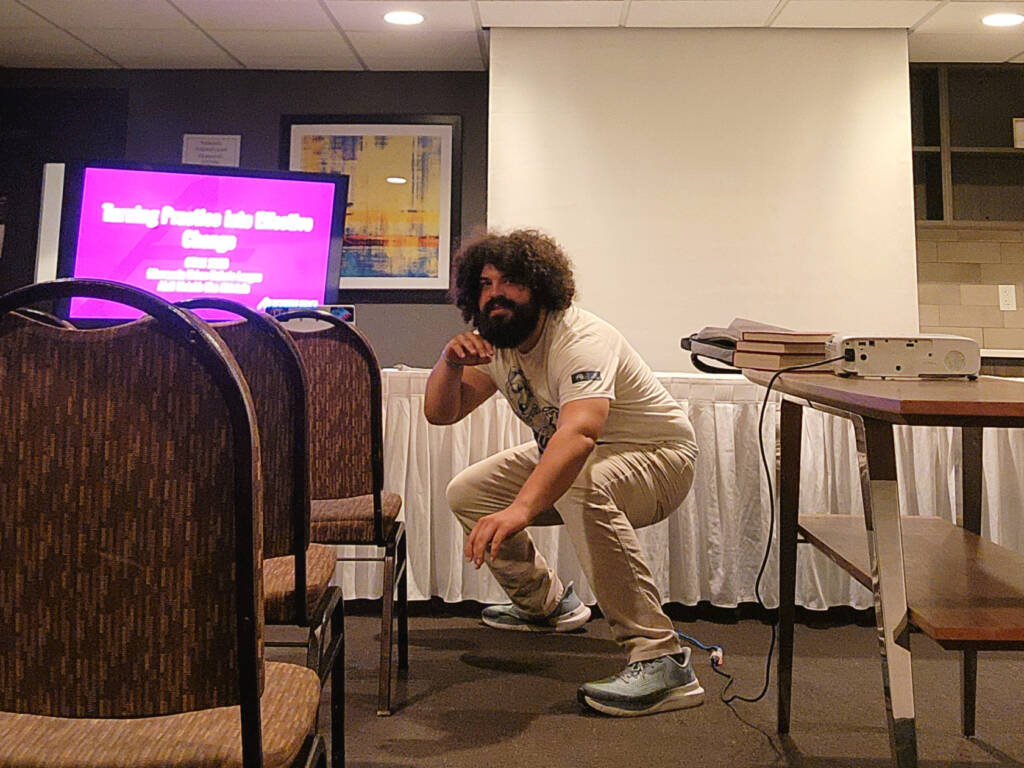
Turning Practice into Effective Change – Advice for Debate Coaches
Effective practice makes perfect: the principles that built the nation’s largest middle school urban debate program
By Abdi Melekh Che Akintola, Program Coordinator, Minnesota Urban Debate League
MNUDL’s debate programming works because it puts students in a carefully designed system that is built on the science of learning – allowing people who have never debated to become effective coaches.
That was the heart of Melekh Akintola’s session at CTAM 2026, in the third year presenting there. Here’s the short version for everyone who couldn’t make it.
The present we live in
The Twin Cities have some of the country’s widest racial gaps in wealth, and they follow students into the classroom. Melekh cites the 2019 Housing Justice Center Report on Redlining in Saint Paul. The report shows that In Saint Paul, 61.2% of white households own their homes, compared with 16.9% of Black households. High-income Black applicants were denied home loans about 3.3 times as often as white applicants with similar incomes even as income levels rose. (2009-2012).
Property taxes helping fund schools (28.3% of education funding in Minnesota), represents one of many ways that wealth gaps become resource gaps. Those show up as achievement gaps of 20 to 26 points on national reading and math tests, and they start before kindergarten. Socioeconomic status is the single biggest factor in school readiness, affecting not just reading and math but persistence, self-control, and social skills.
Urban debate comes in
Urban debate leagues exist to bring the benefits of competitive debate to the students who’ve had the least access to it. MNUDL was founded in 2004 as a program of Augsburg University with that mission. Today we run nearly year-round: high school and middle school debate, East African debate, Debate en Español, Financial Literacy debate, and a summer camp.
Melekh argues that debate is uniquely positioned to improve the academic outcomes of every student who participates in the activity. That was their experience, the experience of their peers, the experience of every student they coached, and the experience of every student that they have witnessed across High School, Middle School, East African, Financial Literacy Debate and Debate en Español in their time as a program Coordinator.
The evidence
Students who debate do measurably better, even after accounting for who chooses to join. Minneapolis Public Schools compares our debaters with peers of similar race, income, and prior achievement:
- Compared to 48% of peers, 67% of debaters took at least one advanced class.
- Compared to 30% of peers, 95% of debaters met attendance benchmarks.
And that outcome is not just possible because students who choose to debate are more likely to take advanced classes or show up to school. Dr. Briana Mezuk of the University of Michigan tackled the self-selection question head-on. She statistically weighted debaters and non-debaters to look alike before debate, based on demographics, 8th grade test scores, and income. Debaters still came out ahead on the ACT and SAT, in high- and low-poverty schools alike.
The pedagogy behind our programming
Our program design rests on a simple rule: if an incentive isn’t built into the system, it won’t appear on its own.
One of the key pedagogical ideas that underpins the Minnesota Urban Debate League’s work is Kolb’s Experiential Learning Model. Kolb’s experiential learning cycle is a four-stage continuous process where knowledge is created through the transformation of experience. Created by David Kolb in 1984, the model shows that we learn best by doing, reflecting, thinking, and acting.
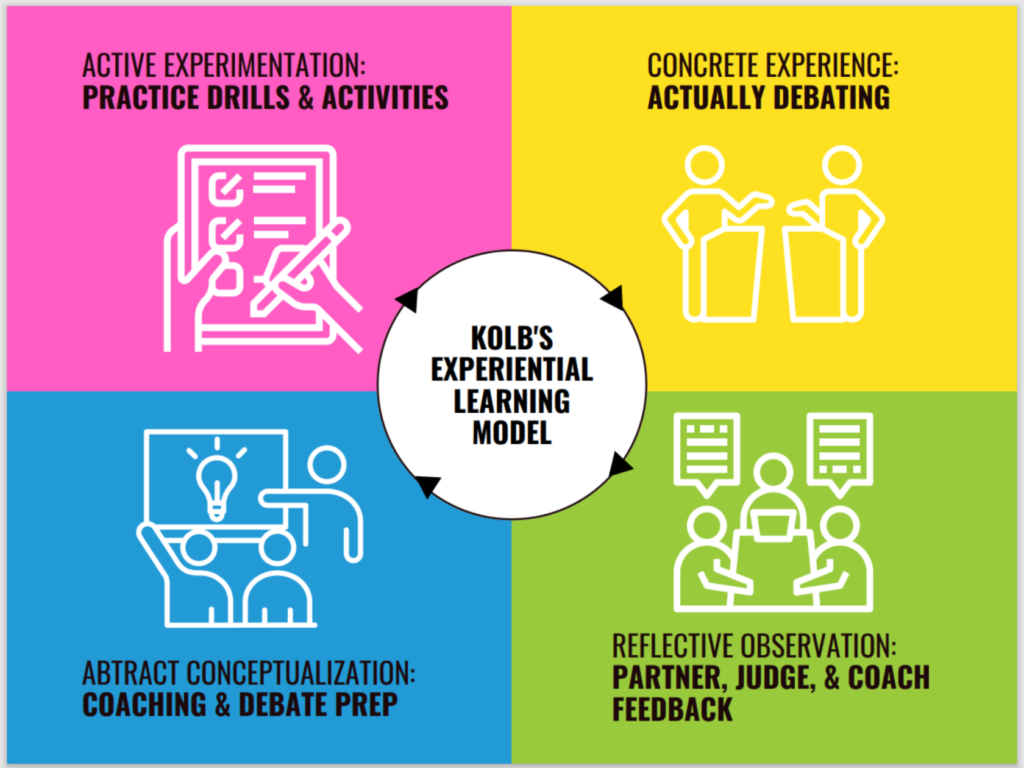
Jake Swede, the Program Director of the MNUDL applied David Kolb’s theory to the way that students learn debate. Debate is able to repeatedly and consistently improve the academic outcomes of every student who comes into the classroom precisely because they are always somewhere in process of creating (arguments and responses to arguments – by themselves or with their coach at practice), reflecting (on the feedback from judges, coaches and the performance of themselves and their peers), thinking (how do I incorporate that feedback the next time I am in that situation?) and acting (the concrete experience of debating or drills at practice)
Naive practice vs. effective practice
Kolb’s theory shows us that doing something a lot isn’t the same as getting better at it. Naive practice is repetition with no plan or feedback. Effective practice deliberately targets your weaknesses at the edge of your ability.
For example, Melekh revealed their Elo Rating on their Chess.com account:
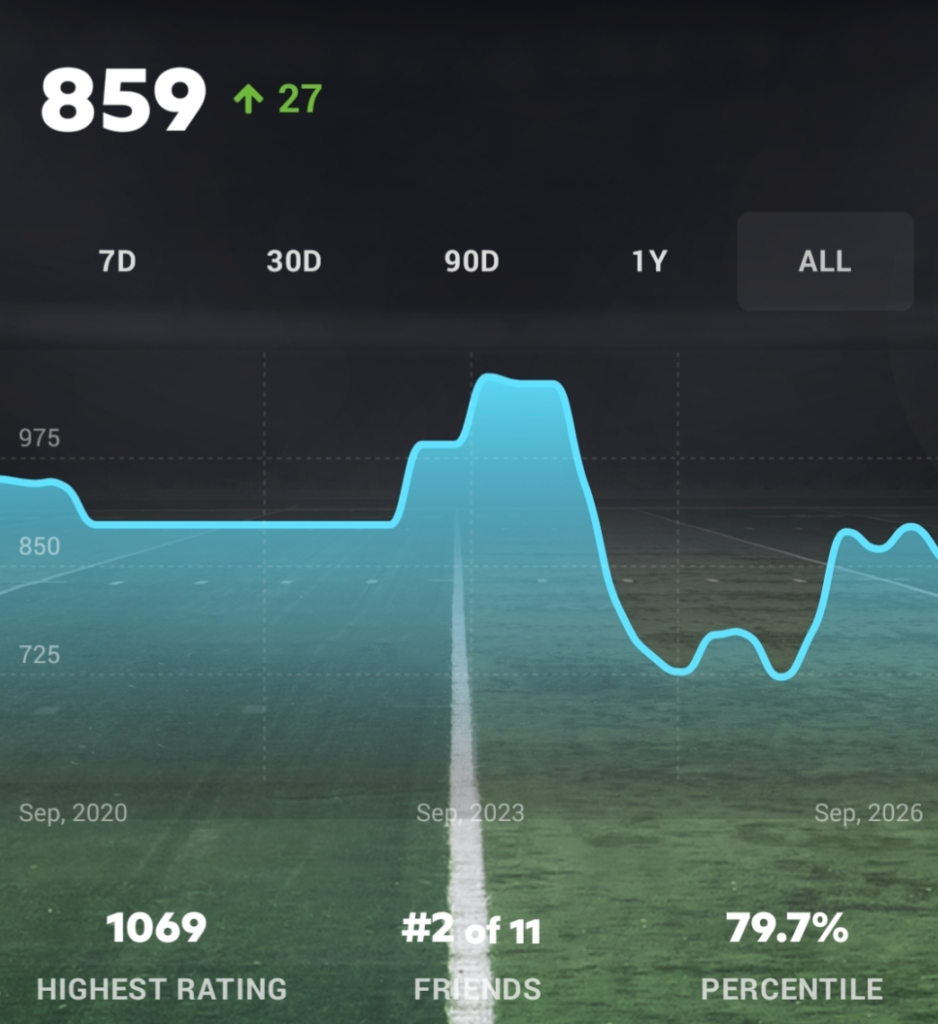
After 6 years of playing Chess, Melekh functionally hasn’t improved. Melekh has been engaged in Naive Practice for years – just endlessly playing chess without someone there to help them identify mistakes, provide drills and exercises around weaknesses, or to help gameplan and create strategies. It illustrates the idea that just because you spend a lot of hours doing something, doesn’t guarantee that you will improve.
But that isn’t the experience of our students. As soon as a mistake is made in a debate round judges in the Minnesota debate community are trained to not only point out the correction, but to do so in language that is kind and accessible to the students – assuming they understand nothing about the activity. The coach later reads the judges feedback and comes up with a plan on how best to help that student address whatever went wrong during the debate.
Keeping students in the cycle
Debate is a system for effective practice. It maps onto Kolb’s experiential learning cycle: students debate, get feedback from partners, judges, and coaches, prepare with their coach, drill, and debate again. With good coaching, each lap builds on the last instead of repeating the same mistakes.
The danger is falling out of the cycle through a bad tournament, poor feedback, weak coaching, or lack of prep. That’s where coaches step in, and it’s why every piece of our program exists: to keep students in the loop. When they stay in it, debate closes gaps our systems are failing to close.
What that looks like: middle school debate
Our challenge is building a rigorous, large middle school program with three program staff and teacher-coaches who have mostly never debated. Our answer is to put the structure in the system:
- A longer ramp-up: 12 pre-season lessons over about two months, versus roughly three weeks in high school.
- Curated evidence packets: cards edited to a middle school reading level, with each division unlocking a new argument type, from case (Rookie) to kritiks (Varsity).
- A fixed topic rotation: education reform, police reform, and Mars colonization, so teachers become content experts.
- Templated judge feedback: so judges, coaches, and debaters share one language.
Limiting the evidence limits the skills expected, which makes them easier to teach.
Kolb’s Experiential Learning Model ensures that students doing debate in Minnesota make the most out of the time they spend practicing. We have intentionally built a scaffolded system that tries to limit the cognitive load on the student, foster a growth mindset and through that students of all backgrounds are able to move through Naive Practice into Effective Practice.
The payoff shows up in high school. Teddy Munson, who coaches at Tartan High School, says middle school alumni pick up concepts faster and become natural peer mentors.
Thank you to everyone who came to the CTAM presentation, For Skye, Beth, Jamie and Teddy for inspiring me to present at CTAM and to Teddy for sharing the Tartan team’s experience.

